Breadcrumb

Career Tracks

Ray of light icon

About Career Tracks

Career Tracks is the job classification structure that aligns jobs at the University to their respective labor market by occupation and supports the development of possible career paths designed to enhance career mobility. Levels for individual contributor, supervisory and management roles within each distinct functional area are defined consistently across occupations and with the labor market for comparable jobs.

Career Tracks organizes jobs into families, functions, categories and levels which corresponds to specific job codes and salary grades. Job categories and career levels are used as needed within each family and function. Each staff member will receive a new job description, or job standard, based on this structure which will be further customized to the position.
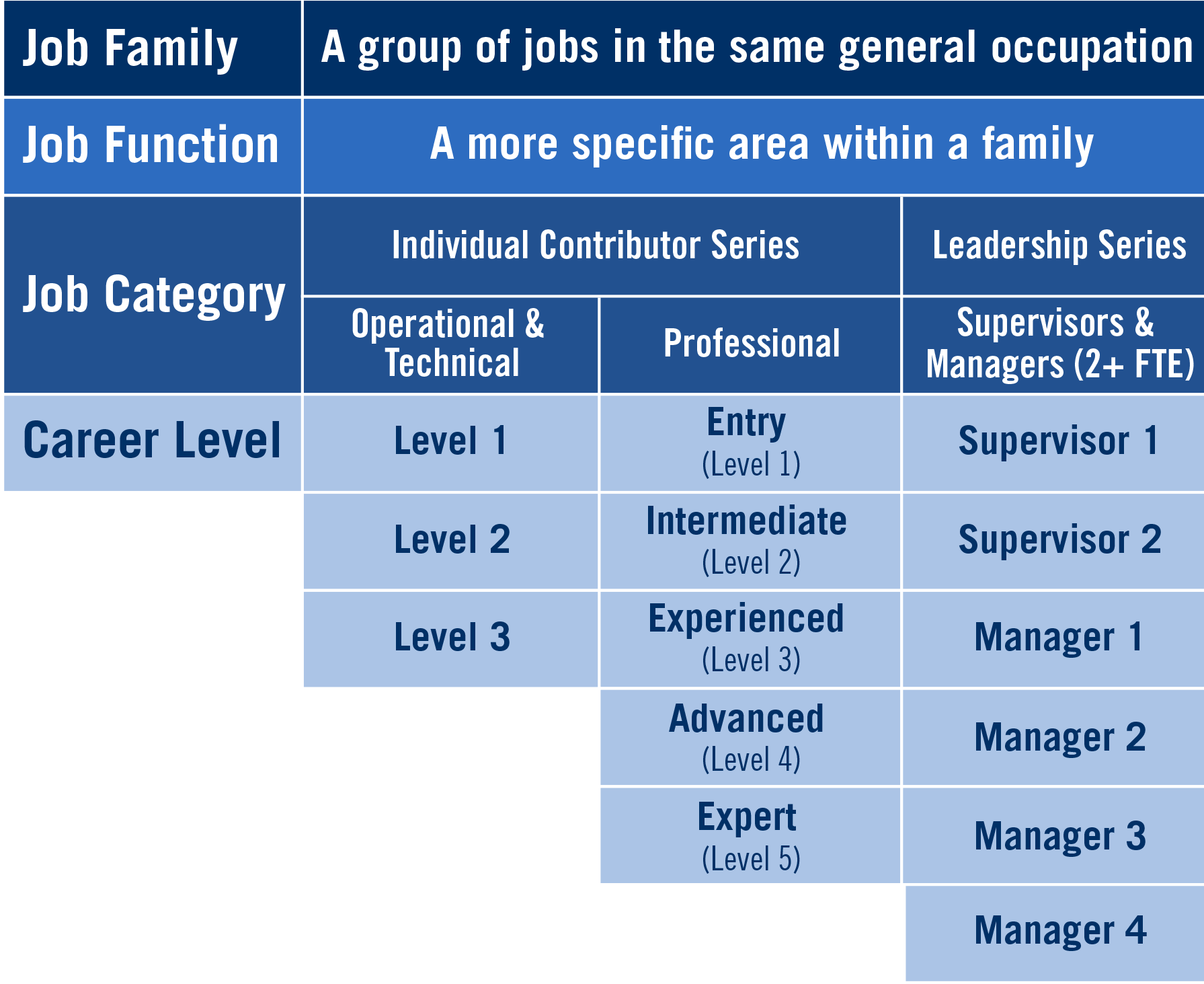
Career Tracks Structure

Job Family: A group of jobs in the same general occupation (e.g. Finance)

Job Function: A more specific area within a family (e.g. General Accounting)

Job standards within families fall into one of the categories in this illustration.

Defining jobs using consistent definitions of function, category, and career level (rather than using generic titles such as "analyst" or "manager") allows accurate pay comparisons with other employers in our labor market for comparable jobs.

An illustrative diagram of the Career Tracks structure in various shades of blue background to highlight the variations of jobs.
compensation_career-tracks_career-tracks-illustrated

Career Tracks – Career Mobility

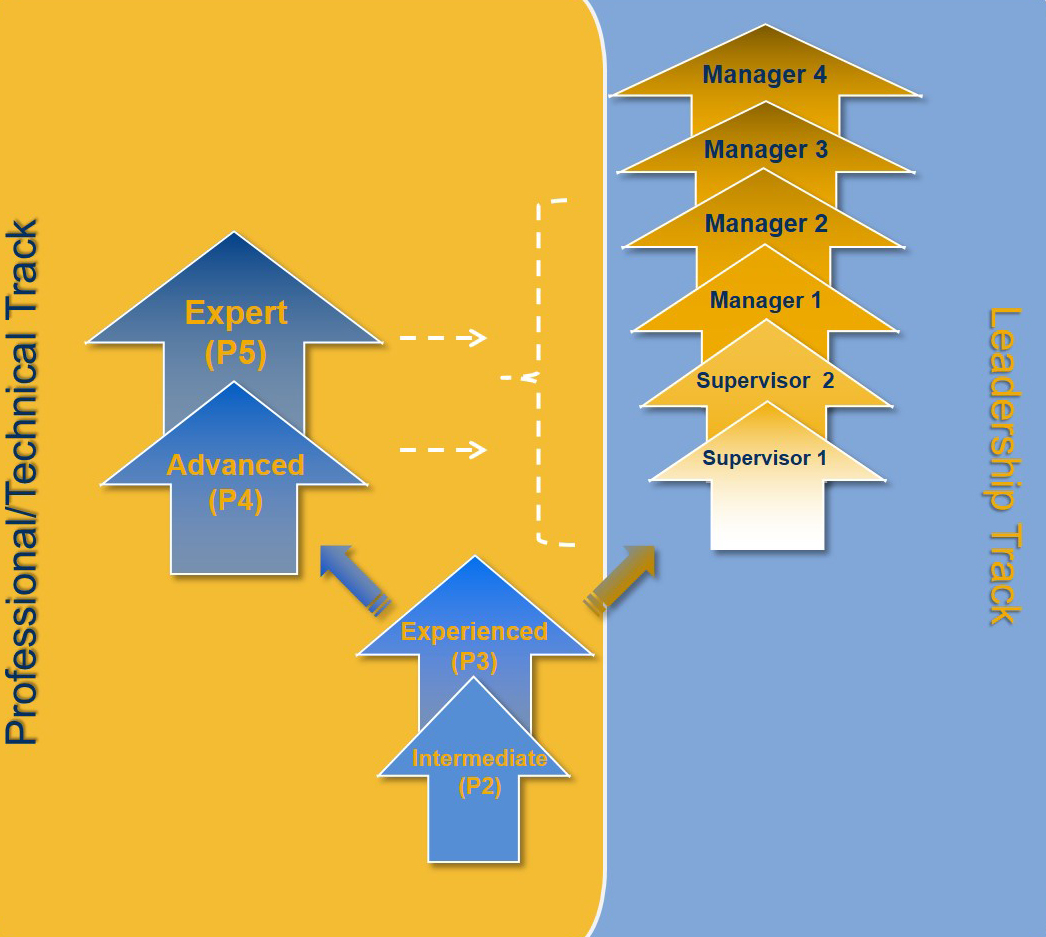
This chart illustrates career mobility in the Career Tracks structure. Every job in the Career Tracks structure will fall within a cell on the chart.

At the highest level, jobs are organized by job family and function.

A job family is a grouping of jobs that are related. Within each job family, jobs are more narrowly defined by occupation, or job function. Each job is also assigned to a job category. The category describes the type of work performed rather than the occupation or subject area.

There are three categories, Operational & Technical, Professional (individual contributors) and Supervisors and Managers, who achieve results through the efforts of staff.

Finally, each job is assigned a career level based on its scope, impact, responsibilities and requirements. The career level is based on the requirements of the position, not the qualifications of the individual employee. For example, a Financial Analyst in the Professional job category may be assigned to Professional Level 1, 2, 3, 4 or 5.

Career Tracks supports career mobility by showing possible next steps within a job function and providing clearer information about how employees can advance to the next career level.

Career Tracks Resources

Job Descriptions

As part of the Career Tracks implementation, Human Resources generated individual job descriptions based on the relevant job standard for each position which transitioned to Career Tracks. All UC staff who are not represented by unions and are not part of the Senior Management Group (SMG) are mapped to the Career Tracks structure. Academic and represented positions are not mapped to the Career Tracks structure.

Job Description Tip Sheet

The Job Description Tip Sheet explains how to create a comprehensive job description. It includes guidance for getting started, writing an effective job description and selecting appropriate action verbs.

Job Description Tip Sheet


Consistent Methodology

With the collaborative work between HR and each of the organizational units, Career Tracks ensures a high degree of consistency across the campus and across the system. Consistent methodology is essential to the integrity of Career Tracks across the UC system. UC campuses follow common procedures and job standards to help ensure that positions performing comparable work are evaluated consistently.

As we reviewed hundreds of job descriptions, comparator positions, and the leveling of positions, we applied that consistent methodology in reviewing the system-wide job standards.

With Career Tracks, we have a classification structure that reflects the external job market and makes it easy to identify relevant benchmarks and comparators. Our structure, based on specific job families and functions, allows us to map paths for career progression and individual employee development so that we can manage our careers at UCR. As other UC locations transition to the common Career Tracks structure, career planning can encompass positions across the UC system.